
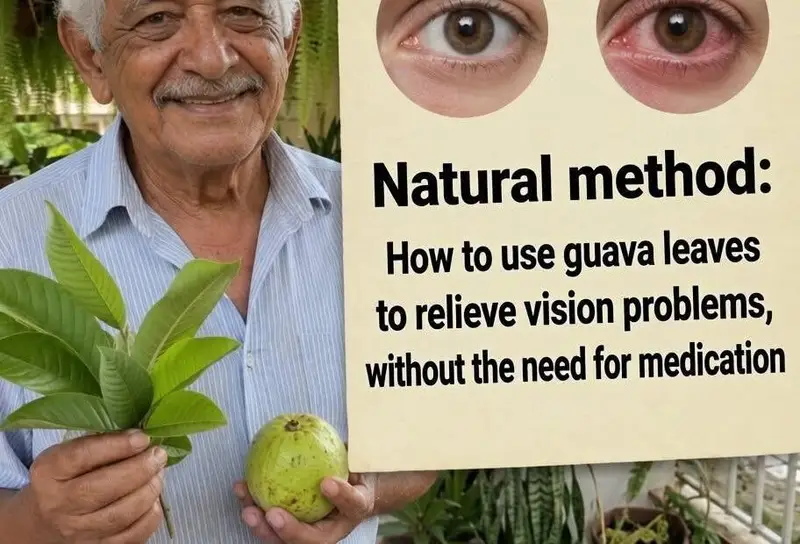
Our eyes work hard every day. Spending hours looking at phones, computers, and television screens can leave them feeling tired, dry, or uncomfortable. As we grow older, changes in vision can also become more noticeable, making eye care an important part of maintaining overall health.
Guava leaves have been used in traditional wellness practices for generations. These green leaves contain plant compounds that have attracted scientific interest because of their antioxidant and anti-inflammatory properties. However, while guava leaves have several traditional uses, there is currently insufficient clinical evidence that they improve eyesight, eliminate eye strain, or treat eye diseases.
Understanding what guava leaves can and cannot do is essential before trying any home remedy.
1. Guava Leaves Contain Antioxidant Compounds
Guava leaves contain naturally occurring plant compounds, including flavonoids and polyphenols. Some of these substances have demonstrated antioxidant activity in laboratory studies.
Antioxidants help protect cells from oxidative damage, which is involved in various biological processes.
However, laboratory findings do not prove that applying guava leaves to the eyes or drinking guava leaf tea improves vision in humans.
For eye health, a balanced diet containing a variety of fruits and vegetables is a more established way to obtain beneficial nutrients.
2. Can Guava Leaves Relieve Eye Strain?
Eye strain can occur after prolonged reading, computer work, or smartphone use.
Common symptoms include tired eyes, temporary blurred vision, headaches, and difficulty focusing. Dry eyes and uncorrected vision problems can also contribute.
There is no reliable clinical evidence that guava leaves directly relieve digital eye strain.
Instead, try these practical measures:
- Follow the 20-20-20 rule: every 20 minutes, look at something approximately 20 feet away for at least 20 seconds.
- Blink regularly when using digital screens.
- Adjust screen brightness and reduce glare.
- Take regular breaks from close-up work.
- Make sure your glasses or contact lens prescription is appropriate.
- Consider lubricating eye drops if recommended by an eye-care professional.
If eye strain persists or your vision changes, arrange an eye examination.
3. Guava Leaves and Age-Related Vision Changes
As people age, they may experience difficulty reading small print, reduced contrast sensitivity, or other changes in vision.
These changes can result from several conditions, including presbyopia, cataracts, glaucoma, and age-related macular degeneration.
Although guava leaves contain plant compounds studied for their biological properties, there is insufficient human evidence that guava leaf preparations prevent or reverse these conditions.
Regular eye examinations are particularly important as you get older because some eye diseases develop gradually without noticeable symptoms during their early stages.
Early diagnosis can help protect vision and identify appropriate treatment.