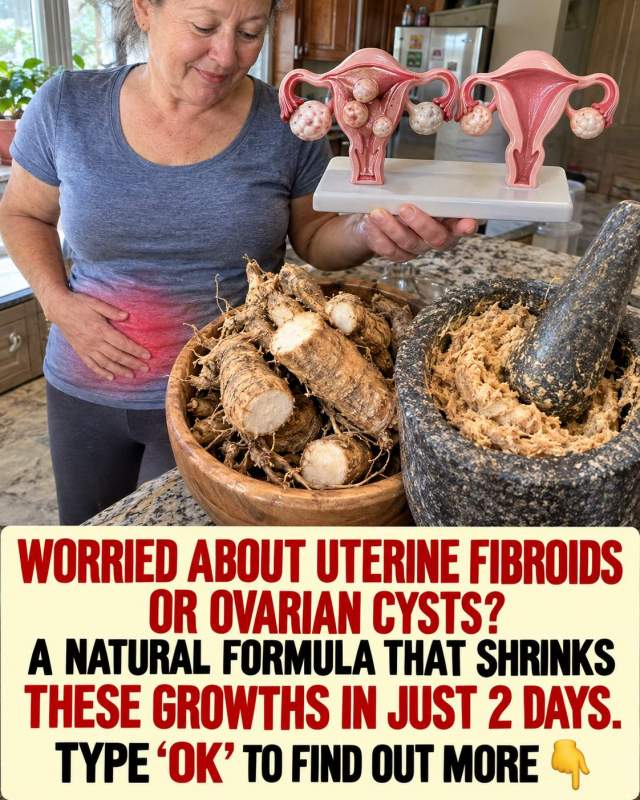
That bitter root tea is being pushed as a direct strike against fibroids and ovarian cysts — the kind of lower-belly trouble that makes your pelvis feel stuffed, tense, and one wrong movement away from protest.The dark brew, the woody fragments, the sharp earth smell rising off the cup — that’s the bait. The real promise is harsher: less pelvic pressure, less cramping, and less of that packed-in feeling that makes jeans feel like a bad joke by midday.For women dealing with fibroids or cysts, this is not “just discomfort.” It’s the ache that changes how you stand, how you sleep, how you walk to the kitchen, and how fast your hand reaches for a heating pad before the day has even started.The $100-billion wellness machine barely whispers about this because there’s no patent hiding inside a root that grows in the dirt. That’s the ugly reality: the cheapest fixes get the least airtime, even when they speak directly to the body’s own blueprint for release.Why the lower belly feels under siegeFibroids do not behave politely. They press, stretch, and load the uterus with a dense, knotted weight that can make standing up feel like lifting a sandbag from inside your own body.Think of the uterus like a small room where somebody shoved in extra chairs, a side table, and a box of bricks. Every movement gets tighter. Every period feels louder. Every day carries that hidden drag that makes your body feel crowded before breakfast.That’s the ugly contrast when the area is congested: tissue keeps trying to move, but everything feels pinched, irritated, and overworked, like a hose tied in knots. Flow is still happening, but it turns strained and uneven.The first thing women notice when that pressure starts to shift is not some dramatic movie-scene miracle. It’s ordinary relief: standing up without that deep pelvic pull, sitting through a meeting without constant adjusting, and moving through the day without feeling like the lower abdomen is bracing for impact.That bitter root tea is being framed as a Pelvic Decongestion Reset. The idea is simple and sharp: help loosen what feels stuck, backlogged, and swollen so the pelvis stops acting like a clogged drain under pressure.Why ovarian cysts feel like a different kind of threatCysts don’t always announce themselves with a roar. Sometimes they sit there like a water balloon tucked into the wrong pocket of tissue, quiet until one bend, one twist, one long walk turns the whole area into a warning siren.Picture carrying a backpack with a leaking bottle inside it. You can keep moving, but every shift makes the problem louder, wetter, and harder to ignore.That’s the difference with cysts: the fear is not only pain, it’s unpredictability. The body starts bracing for the next flare, the next stab, the next sudden reminder that something is occupying space where it should not be.After a few days of consistency, the shift people notice is usually not “everything is gone.” It’s smaller and more believable: less tugging when they turn in bed, less sharpness when they bend, less of that nervous flinch before a sudden movement.That matters because cyst discomfort is often a body-wide stress signal. It makes you guard your steps, shorten your stride, and hold your breath without realizing it.When the internal pressure eases, the whole day changes. The kitchen counter, the car seat, the walk from the parking lot — all of it feels less like a test.Why fibroids and cysts do not feel the sameFibroids tend to feel like weight. Cysts tend to feel like threat.Fibroids can make the uterus feel like a cramped closet stuffed with too much furniture. Cysts can feel like a pressure point that refuses to stay quiet, like a balloon pulling against the wrong wall.That difference matters because the body’s response is different too. One woman feels the crushing heaviness first. Another feels the sharp warning first. Another feels both and can’t tell which one is making the day harder.Think of the reproductive system like a sink with a trap full of sludge. Once the drainage slows, everything above it starts to smell wrong, feel heavy, and back up under pressure.The bitter brew is being sold as the thing that clears the trap, restores flow, and quiets the constant protest. That is the appeal — not fantasy, but the hope of getting back some space inside your own pelvis.And that’s why nobody told you sooner: the cheapest fix gets the least airtime, not the least power.What the body notices when the load starts to liftThe emotional payoff here is not magic. It’s room to breathe.You stand up without that deep pelvic pull. You button your clothes without that swollen resistance. You move through the day without constantly checking whether your lower belly has turned into a balloon again.Over time, the pattern gets clearer: the cramping doesn’t roar as loudly, the lower abdomen stops feeling packed and under attack, and the body stops shouting every time you change position.Think of it like opening a window in a room that’s been stale for months. The air doesn’t just move — the whole mood of the room changes.For women dealing with fibroids, that can mean the heavy dragging sensation is no longer the first thing they notice when they wake up. For women dealing with cysts, it can mean less of that nervous brace before every twist, stretch, or sudden turn.And once that shift starts, even ordinary things feel different: walking to the mailbox, climbing stairs, or sitting through dinner without that low, angry pressure stealing your attention.The real wrench is this: load the drink with sugar or pair it with a heavy meal, and you turn a bitter rinse into another burden. The body stays in storage mode instead of release mode, and the whole point gets buried under the wrong pairing.The next piece is the one that decides whether this feels like a dead end or a true internal reset: the timing that lets the body actually use the bitter signal instead of fighting it.This article is for informational purposes only and does not replace professional medical advice. Please consult your healthcare provider for personalized guidance.
What Bitter Root Tea Triggers Inside Fibroids and Ovarian Cysts